In an era where learning is just a click away, it’s difficult to conceive of a time before those digital encyclopedias we call the internet. Here we have Wikipedia—the groundbreaking site that has changed the way we hunt and gather information since 2001. We no longer have to rummage through printed volumes or confine ourselves to dusty library shelves: a plenitude of human knowledge is at our disposal, defined and redefined by a never-ending stream of contributors from all corners of the world. But where did this crowdsourced wonder come from, and how has it shaped our connection to information? Come with us as we trace the intriguing history of Wikipedia—an odyssey that not only transformed access but also redefined the role of author in the age of the digital. Buckle up for a ride through bytes and brainwaves as we discuss how a single website ignited a revolution!
Introduction to Wikipedia and its purpose
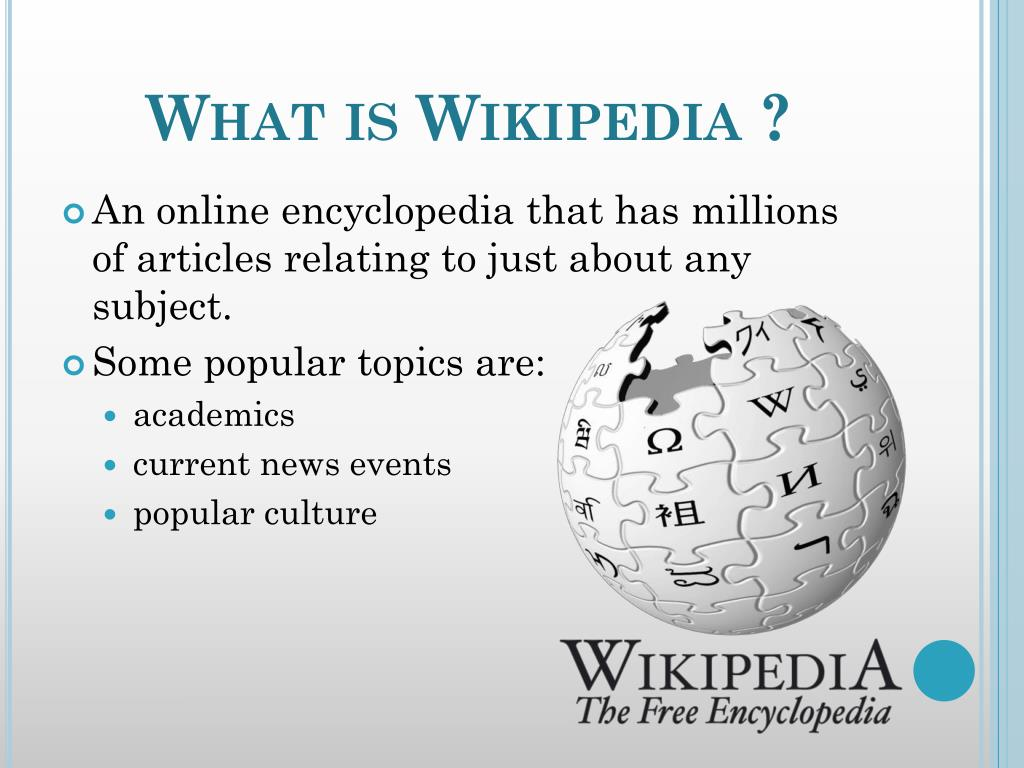
Imagine a world in which you could have the answers whenever and wherever you needed them. This fantasy turned into fact with the release of Wikipedia. Since then, it has completely changed the way I and most other people I know find information. The era of chunky encyclopedias confined to bookshelves in libraries has long gone. Now, anyone can create and edit articles on just about any subject on the planet.
The goal of Wikipedia is not just to share knowledge; it is to make knowledge itself more democratic. By welcoming users from all walks of life to help build it, the site subverts traditional gatekeepers of knowledge and promotes collaboration across borders. It’s a bold experiment in openness that has redefined what an encyclopedia can be.
Beginning our voyage into Wikipedia, we’ll consider its history and its effect on traditional reference materials like the encyclopedia, along with its pros and cons and issues that have occurred during its cruise. Strap yourselves in for a trip through time that reveals just how profoundly Wikipedia has shaped what we know.
The history of encyclopedias and information access before Wikipedia

Before the advent of digital media, encyclopedias were bulky tomes that lined the shelves of libraries. They were the best-known types of organised knowledge, but they had limitations.
You had to go to the library or buy a costly volume to get hold of information. Traditional encyclopedias were written by experts in the form of a printed book, which often caused the content to become outdated.
The Britannica and World Book were broad-based sources of wisdom, but their availability was limited by cost. For a lot of people, trustworthy information always seemed one step too far.
Plus, the research required cross-checking multiple sources, “Whether you like it or not, whether you think it’s fun or not.” The process was long and occasionally maddening.
People longed for faster access — and without barriers, something that seemed unachievable in a world governed by printed matter. That void would give rise to innovation and change as technology evolved quickly towards more accessible platforms such as Wikipedia.
The birth of Wikipedia and its early years
Wikipedia was started in January 2001 by Jimmy Wales and Larry Sanger. The concept was both straightforward and radical: a web-based encyclopedia that anyone could edit. This was an attempt to make knowledge democratic.
Wikipedia rapidly gained traction in its early days. Experts from all over the world were now contributing to seemingly endless topics. Every entry was now a patchwork of collective wisdom, authored by devotees eager to share what they knew.
The simplicity of the interface also made it unnerving to steer through subjects–there was none of the clutter of traditional encyclopedias to distract you. The format, new to the early adopters, was hailed as user-friendly and representative of different perspectives.
As the platform grew in popularity, it also raised concerns over accuracy and trustworthiness. Excitement for open contributions conflicted with concerns about misinformation — a tension that persists as Wikipedia continues to evolve amid advancements in technology.
Impact on traditional encyclopedia companies
The rise of Wikipedia altered the playing field for conventional encyclopedia publishers. These established organisations, such as the Britannica, had never before been so challenged. For years, they’d been the places to go for all the information you could ask for.
With Wikipedia’s free, easy-to-use format, many wondered whether paid subscriptions had value. People liked the free flow of instant access to a vast amount of knowledge. It’s the change that has forced the print publishers to reconsider their approach.
Some tried to adjust by producing online versions or by selling subscriptions to digital editions. Others scrambled to keep relevance in a day when expert curation was less valued than the collaborative creation of content.
In the course of Wikipedia’s rise, it became clear that traditional encyclopedias couldn’t win on range alone. Attention turned from just informing to being accurate and reliable in a changing digital era.
Advantages and disadvantages of Wikipedia
Wikipedia is a treasure trove of information just a tap away. And being freely available on the Internet, it is a crucial tool for students, academics and the intellectually curious from all over the world. With its millions of articles on a wide range of subjects, users can get quick answers without needing to consult multiple sources.
However, the open-editing model is also a cause for concern for reliability. Entries can be edited by anyone, and that sometimes results in errors or biased views being presented as facts. This potential misinformation means users have to cross-check facts with authoritative materials.
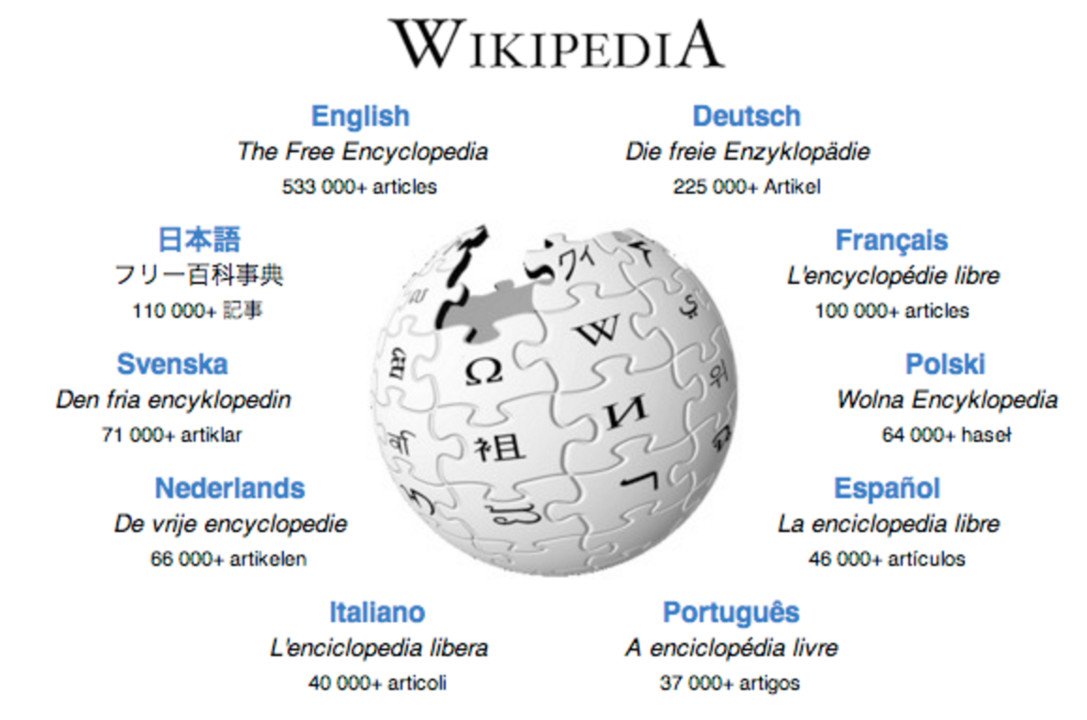
Another bonus is that with Wikipedia, you can access many different languages. It is multi-lingual, enabling access to knowledge worldwide and bridging language barriers.
On the other hand, you rarely get the depth of coverage of specialised topics you might want compared with a “real” encyclopedia that employs expert contributions. In response to some users disconnected by the overwhelming volume of information or who rely on more detailed information rather than broad summaries, some expressed concern that Wikipedia is “aiming for the lowest common denominator”.
Controversies surrounding Wikipedia
Wikipedia is not without controversy. Because of the platform’s open-edit nature, anyone can contribute information, raising questions over the reliability of the material.
Vandalism is an ongoing problem. Entries may be vandalised or bogus information inserted in seconds. Some mistakes are corrected rapidly, but many others stay much longer than they should.
Bias is also a problem. Articles may express the point of view of active contributors rather than providing a neutral point of view. This has provoked controversy over representation and the veracity of data on important issues.
The anonymity of Wikipedia also brings up questions of responsibility. Who wrote which parts? In some cases, your scepticism might be undermined by the opacity of the claims.
However, there continues to be a robust discussion of the credibility of Wikipedia in academia and other circles, stimulating further investigation into how we evaluate online information sources.
Evolution of Wikipedia over the years

Since its 2001 launch, Wikipedia has undergone major changes. To begin with, it was just a very basic collaborative knowledge-sharing platform. The idea of user-generated content was groundbreaking, and it gave volunteers the ability to add and edit articles at will.
Wikipedia has gradually modified its policies and guidelines to increase its accuracy over time. The growing site also attracted a burgeoning community of editors. This diverse group provided them with a wide range of expertise, which helped to improve the quality and depth of articles.
Wikipedia’s development was significantly influenced by advances in technology. Other sites have more information that users can view the Mobile access provides a new way for people to access information on the go. Have you ever used features like citations and links to external references to convince a WikiReader whose credibility is a bit low?
In response to problems — such as vandalism, misinformation and spam — Wikipedia established more rigorous moderation. This commitment to trustworthiness in turn reinforced public trust.
The addition of multimedia changed the way information is presented, enabling richer storytelling through images and video within text-based entries.
Influence on other online sources of information
The influence of Wikipedia has spread throughout the digital world and in the way information is presented and consumed. Many websites now use their collaborative model, letting users add content and edit entries. This democratisation of knowledge fosters a more participatory form of dissemination of information.
Learning platforms have borrowed from Wikipedia’s design. They are community-driven with editorial oversight to maintain accuracy.
Once again, even social media platforms borrow the accessibility principle Wikipedia established for them—prompting users to share fully sourced quick-fire factoids, or link to longer form articles.
And news organisations are also more aware of the need to be transparent in sourcing their facts, frequently treating Wikipedia as a source rather than a final destination for research. Consequently, this wiki has not simply reinvented itself but has inspired changes across the board in how we interact with all manner of digital information.
Future outlook for Wikipedia and information access
The future of Wikipedia is about to get an overhaul. As technology continues to progress, so does the ability to share information. The increasing prevalence of artificial intelligence (AI) and machine learning (ML) may help enhance the accuracy and relevance of content. Greater collaboration among users could result in more diverse articles. This could make the dynamic even more democratised and friendly to the larger community.
But, is it all smooth sailing? Misinformation remains a threat, and the need for stronger checks is well known. It will be interesting to see what the future holds for Wikipedia in terms of balancing openness and reliability.
Mobile access patterns are set to change as more users will increasingly depend on their smartphones to find information on the go. To equip itself to respond to these shifts, Wikipedia’s mobile interface will need to adapt and change – and adapt and change it must.
With the world becoming increasingly digitally literate, Wikipedia has the potential to be an indispensable teaching aid (in countries that need one the most in the developing world). It’s never been more important, and it is likely to become far more so in the next few years.
Conclusion: The lasting impact of Wikipedia on the way we access information.
access information. It tore down traditional barriers, making it possible for anyone with a connection to the internet to tap into knowledge on any number of topics through their phones. This democratisation of information has changed the way we learn and consume content.
In contrast with traditional encyclopaedias, Wikipedia is more inspiring in collaborative working with users having different backgrounds. The platform exploits collective intelligence, providing a combination of perspectives which adds depth to several topics. But this open design also raises questions of reliability and accuracy.
Although its editorial practice has been challenged and it has been accused of containing systemic bias, Wikipedia is maturing. Its community is accountable, with many opportunities to hold people accountable via transparency – how you/de discussions alluded to.
The impact of Wikipedia goes beyond itself, and it has made way for many other online sites that focus on contributions from users and group efforts to share knowledge. As society is becoming more and more digital, the significance of Wikipedia and similar platforms will just keep growing.
Now more than ever, one can expect surprising new ways for us to get information from around the world. The groundwork laid by Wikipedia enables us to imagine new horizons for learning resources and public discussion. In the end, perhaps its enduring legacy lies not just in its vast trove of articles but also in transforming how we relate to knowledge itself – allowing anyone to learn, while prompting debate over what is trustworthy information.
FAQs
1. What is the main purpose of Wikipedia?
The overall goal of Wikipedia is to deliver free, trustworthy, and readily available information for all people of the world. It functions as a user-edited encyclopedia, where everyone is allowed to contribute.
2. When was Wikipedia created?
Wikipedia was started by Jimmy Wales and Larry Sanger on 15 January 2001.
3. How has Wikipedia changed the way we search for information?
Wikipedia has made access to information faster, easier to understand, and provided in multiple languages. It replaced the physical encyclopedia and could be updated in real time.
4. Is Wikipedia a reliable source?
Wikipedia is generally considered reliable as a source of information because it cites sources, has references, and is subject to moderation from the community. Since it is subject to edits by anyone, users are cautioned to check information against primary sources.
5. How does Wikipedia maintain accuracy?
Wikipedia is maintained by volunteer editors, administrators, and bots, who monitor recent changes, deter vandalism, and enforce the site’s rules and standards, including having its content backed up by reliable sources.
About the Author