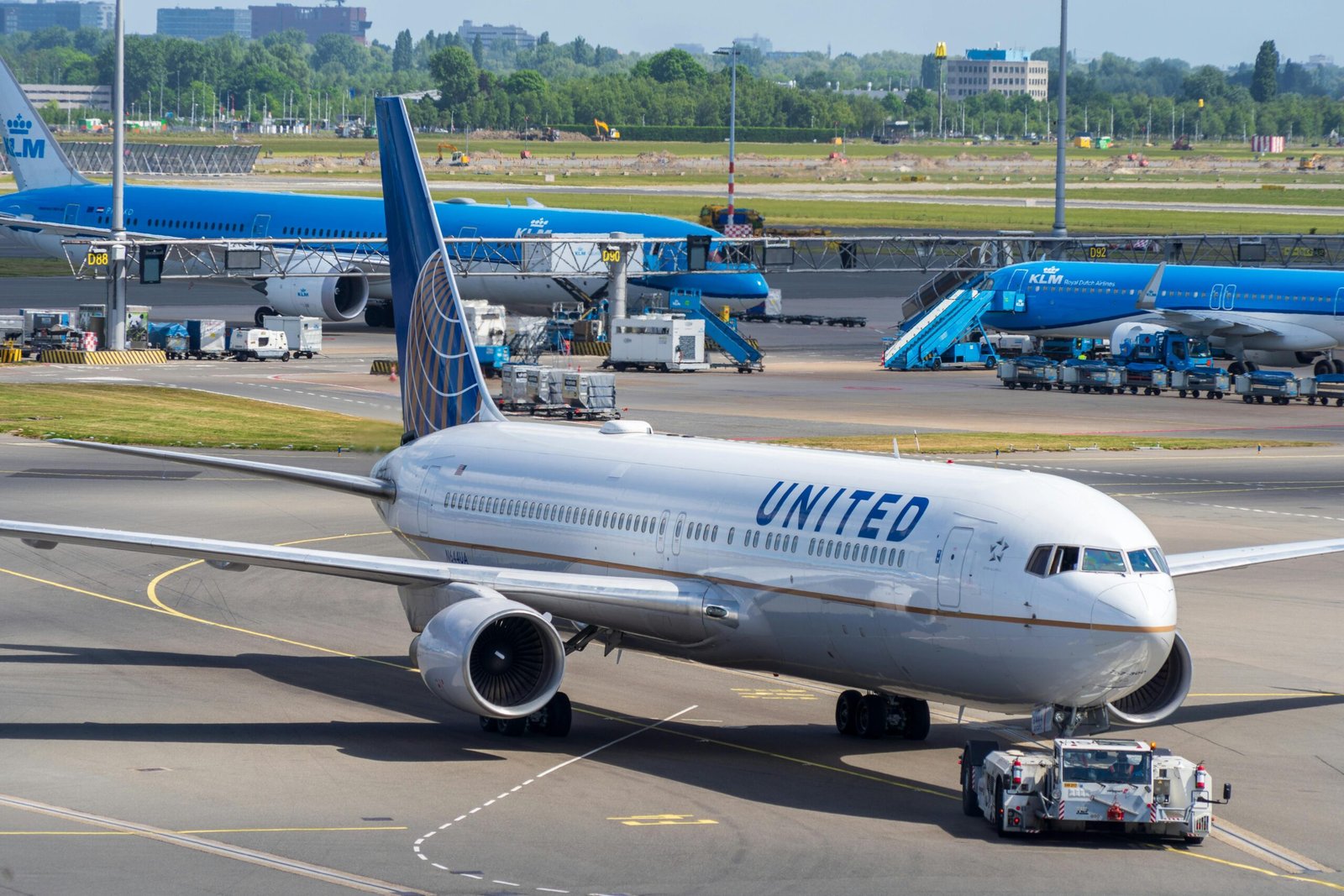
Nowadays people travel by air around the world and it is one of the safest types of travel. Tens of thousands of flights cross international boundaries every day uneventfully. But sometimes, the unexpected happens midair, and a flightcrew has to make a life-or-death decision — one that puts safety ahead of schedule and caution over convenience. United Flight UA967 is just one trillion dollars in operating income; a sickening concoction of untrained employees, poor decisions, and no safety culture. A normal westbound transatlantic flight from Naples, Italy, to Newark, N.J., becomes a potential disaster in midair when the crew detects a technical problem over the Atlantic Ocean. and diverts the plane to St. John’s, Nfld., Canada.
Background: What is United Flight UA967?
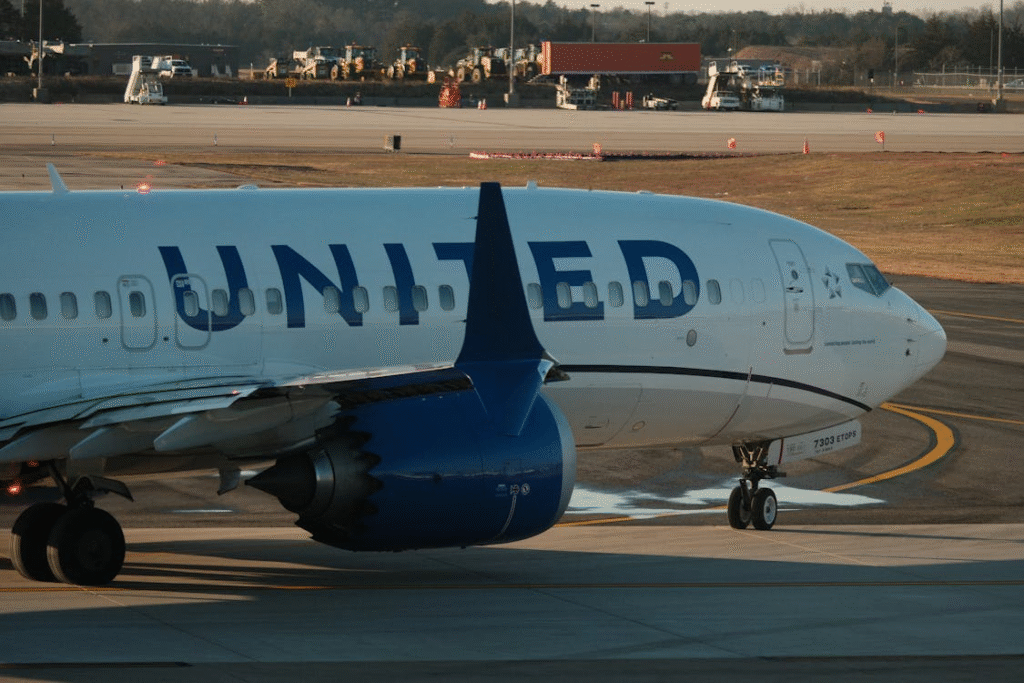
United operates a wide range of long haul transatlantic routes from the US to Europe. Flight UA967 is one of those international flights which you can expect to travel daily between Naples in South Italy and New York in USA. The line is a Politically Charged Route of Travel for those Leisure travelers to and from the Amalfi Coast and Business with links throughout New England.
The path is across the North Atlantic — the crowded, most demanding overhead corridor on the globe. Flights through this tunnel usually last 9-10 hours, and roll are practically nailed to cruising altitude over the ocean. That the geography is significant, since it implies that after a mid-point on a transatlantic flight, viable diversion airports are more commonly found in Canada, rather than back across the ocean in Europe.
What Happened: The Timeline of Events
Today in History On this day, UA967 departed Naples late — the incident all too common on an international flight, usually caused by operational checks, boarding passengers or congestion at the airport. After rising, the plane ascended to its cruising altitude and began the lengthy journey westward over the Atlantic.
The flight was without incident for the first six hours. Passengers sat down, meals were served and the plane rattled along toward North America, not even a shudder. But now — somehow — about seven hours into the flight the situation began to change. The flight deck crew detected the smell of burning in the cabin of the aircraft, and a caution for the forward equipment exhaust fan – a component of the aircraft’s environmental control system.
Although this may sound technical and obscure, the effect is simple: the system of environmental control is responsible for the air circulation and temperature control in the whole plane. An alarm from this system — particularly if it is accompanied by a distinct smell — is taken very seriously by crews. If unaddressed, that issue can escalate into more severe cases impacting air quality and visibility or even more expansive enroute systems.
2:46 p.m. As the plane was flying over the Atlantic, two and a half hours from Newark, it was the captain who chose to return. Instead of continuing over the ocean, the pilots are diverting to the closest appropriate airport.
Where Did UA967 Land?
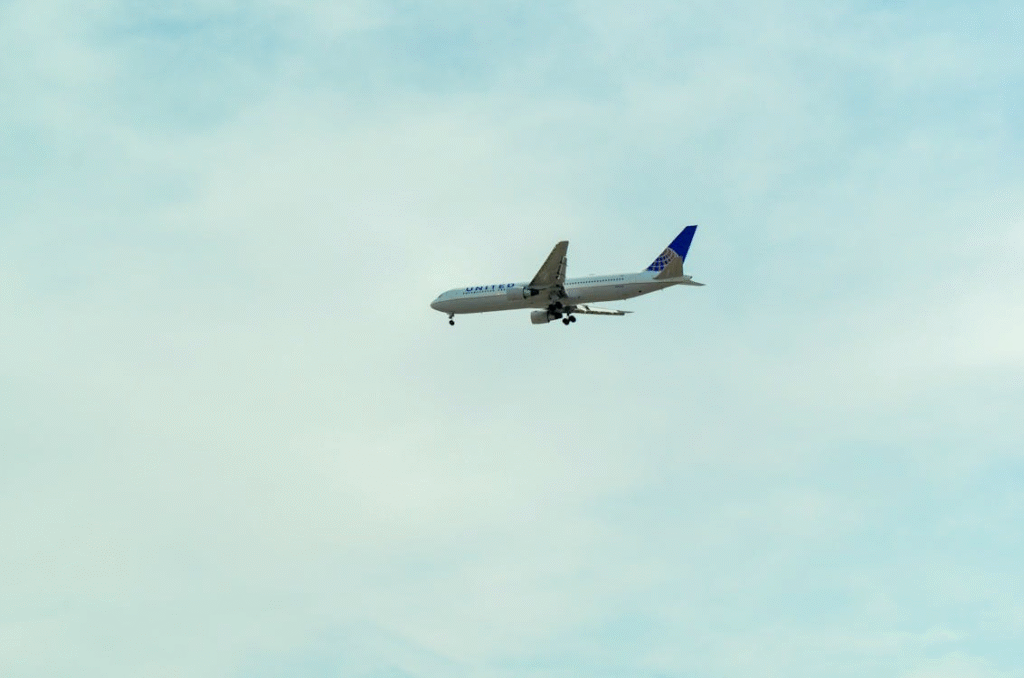
The plane was redirected to St. John’s International Airport (YYT) in Newfoundland, Canada. This airport is also one of the nearest diversion airports for transatlantic flights passing over the North Atlantic. Its position on the eastern Canadian coast allows it to pick up planes that run into trouble half way across the ocean. St. John’s can accommodate large widebody international aircraft and the ground support facilities have been specifically configured to deal with exactly this type of emergency.
The aircraft touched down smoothly and under control. A paramedic team was on site as a precaution. The passengers left the plane without incident, and it was taken right in for a check to find the exact cause of the alert and to make sure of its airworthiness, in case they wanted to fly again.”
Why Did the Crew Make This Decision?
One question that passengers and onlookers alike ask: “Why divert for a seemingly minor sensor alert?” The explanation can be found in the basics of aviation safety and the distinctive difficulties of water-crossing flight.
Modern day commercial aviation is built on the philosophy of risk management before it occurs. They are taught not to wait for things to get worse before doing something. A problem that seems trivial on the ground — a burning odor, a sensor alert, a slight pressure change — poses a much bigger risk when a plane is thousands of feet over the Atlantic Ocean with no place to land. International aviation rules – such as those from the FAA and ICAO – have clear instructions on what to do in exactly these cases.
Changing course is a matter of slight regret at best. It upsets hundreds of travelers, causes high financial expenses for the airline and logistical problems both at the airport of diversion and at the original one [49]. But pilots are crystal clear in their training: if your safety is being compromised, your destination doesn’t matter. The captain of UA967 adhered to the standard protocol of passenger safety first and foremost.
How Did United Airlines Respond?

United Airlines answered promptly to the deflection. St. John’s ground crew were called as the plane was coming down to land. Passengers were notified through the overhead system on the plane and, once off the aircraft, the airline provided information through its mobile app and customer line.
Stranded air passengers were allowed to rebook on the next flight to Newark. United customer service representatives were working to rebook passengers who had connections, or who were otherwise on tight schedules. The airline offered support at the diverting airport, with information on accommodations and transportation, if required.
Transparency was at the heart of the airline’s response. Instead of minimizing the incident, United acknowledged the reroute as a precautionary safety-first measure, well in line with what is considered best practice in managing crises in the aviation industry.
The Role of Technology in Modern Aviation Safety
A especially good example of the UA967 incident is what it reveals about the complexity of modern aviation monitoring. The warning that led to the divert was not due to an apparent catastrophic failure – it was detected by the aircraft’s own diagnostic systems before it could evolve into anything worse.
Modern commercial aircraft have sophisticated sensors that monitor hundreds of parameters in real time, including engine performance, hydraulic pressure, cabin air quality and electrical systems. They are designed to notify pilots of abnormal conditions with maximum lead time, to provide maximum time to assess the situation and determine the safest course of action.
In the case of UA967, the system worked flawlessly. The crew was warned, evaluated the risk, and made a conservative decision for the side of safety. In diversion of UA967, from a technical perspective, this is not a tale of failure — this is a tale of redundancy and early detection doing exactly what it was designed to do.
What Passengers Should Know About Flight Diversions
For diverted flights, it can be a rough journey for travelers. An aircraft making an unscheduled landing at a unfamiliar airport is a newsflash that undoubtedly generates panic. Here’s what travelers need to know if they ever are in a similar circumstance.
Beginner’s Guide to Aviation A diversion is a precautionary thing … mainly. In most cases, the plane lands without incident and it’s a nothingburger. The diversion is chosen in order to prevent worse consequences — the safety system is working, not breaking down.
Second, there are rights for the travelling public. Airlines must also offer clear communications, assistance and free rebooking when diversions cause significant disruptions to travel, under U.S. Department of Transportation (DOT) rules. Passengers should also keep documentation of extra expenses and save receipts as they may be able to get reimbursed through travel insurance or the airline’s compensation program.
Third, be calm and listen to the crew in any circumstance in the air. The cabin crew are trained for these situations and are your assistance.
Broader Lessons for the Aviation Industry
The UA967 diversion is a study in crew coordination, rolling decision-making, and strong pre-flight planning. For any flight going across the Atlantic, the crew and airline dispatch know which airports they can land at if something changes mid-flight. The selection of St. John’s was not a spur-of-the-moment decision; it was the application of a previously arranged backup plan.
Aviation analysts say incidents such as UA967, though unsettling for passengers, ultimately — if handled right — bolster public faith in flying. The fact that it landed safely, that all the passengers walked away uninjured, and that the airline handled it with complete transparency is a reminder that the systems and protocols that govern commercial aviation do work.
“There is more comity as air travel evolves,” with increasing automation and AI diagnostics as well as better real-time data sharing between aircraft and ground control — so these types of incidents are expected to be rarer, Franke said. But the basic principle won’t change: If you’re not sure, land, safely.
Conclusion
United Flight UA967, which was forced to turn back from its Naples to Newark route, wasn’t a disaster — it was air safety working exactly as it should. A sensor alert flagged a possible issue with the environmental control system. They responded promptly and capably, diverting to the nearest suitable airport at St John’s, NF. The humans safe on board? The aircraft was checked and the airline started making arrangements for the passengers, who had been stranded, to continue their travel.
For those on the ground, there was no question that it was a disturbing and invasive incident.” But the UA967 story is, above all, a tale of preparation, professionalism and the dimmed impact of the safe systems that guard countless air travelers day in and day out. So the next you need to catch a flight to Europe, just remember: The systems designed to protect you will be monitoring you, on every single metric, on every single moment of your journey.
United Flight UA967 Diverted: What Really Happened Over the Atlantic?
FAQ 1: Why was United Flight UA967 diverted?
The primary issue was a equipment ventilation system anomaly, that was detected during the flight. A technical alert regarding the aircraft forward equipment exhaust fan was received in the cockpit, and crew noticed a burning smell inside the aircraft system compartment that also led to additional caution.
FAQ 2: Where did the flight divert to, and why that location?
The crew elected to divert to St. John’s International Airport in Newfoundland, Canada. Well-provisioned, St. John’s airport is a regular point of diversion for trans- oceanic flights by virtue of its position, runway length and ancillary facilities.
FAQ 3: Was it a real emergency? Were passengers safe?
The diversion didn’t need to be rushed – it was just the usual precautionary measure in the interests of safety. The aircraft landed safely and there were no reports of any injuries.
FAQ 4: How long was the total delay for passengers?
United Airlines had a replacement plane — also a Boeing 767 — ready to leave from St. John’s to Newark. The passengers ended up arriving in Newark more than 10 hours after their scheduled landing time, but none of them were sick or had any sort of emergency.
FAQ 5: What is ETOPS and how did it apply to this flight?
ETOPS – acronym for Extended-range Twin-engine Operational Performance Standards. It requires that twin-engine aircraft on oceanic flights not stray farther than a predetermined maximum distance to a suitable diversion airport. St. John’s was close enough to be within that distance for UA967, so it was the closest, logical, regulation-in line place to divert.
About the Author








Wish you happiness
Every day is a new beginning