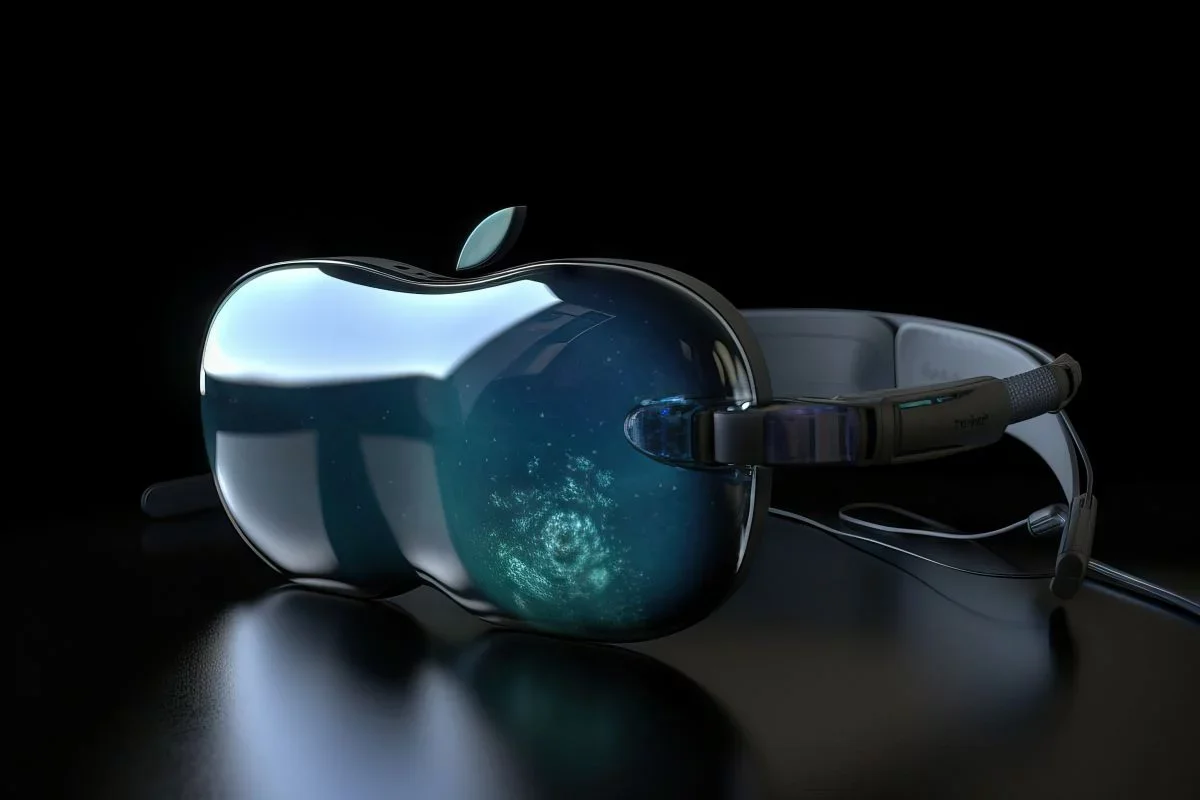
The last few years have seen a proliferation of grandiose claims and viral videos and concepts about the future of technology from the major technology brands. Among them, “Apple Teleport” became a phrase that caught the attention of the world. Social media posts and short videos, along with sensational headlines, have made it seem as if Apple is working on a teleportation-like technology that could instantly send people or objects to any point in space. It’s an exciting concept, but it also leads to questions about truth, science, and digital misinformation.
This article is your fact-based, in-depth guide to everything relating to Apple Teleport including what it is and isn’t, how the myth originated and what real Apple technologies can be loosely associated with teleportation. You should now have a firm grasp on how spatial computing, AI and internet hype collide in today’s tech bubble.
What Is Apple Teleport?
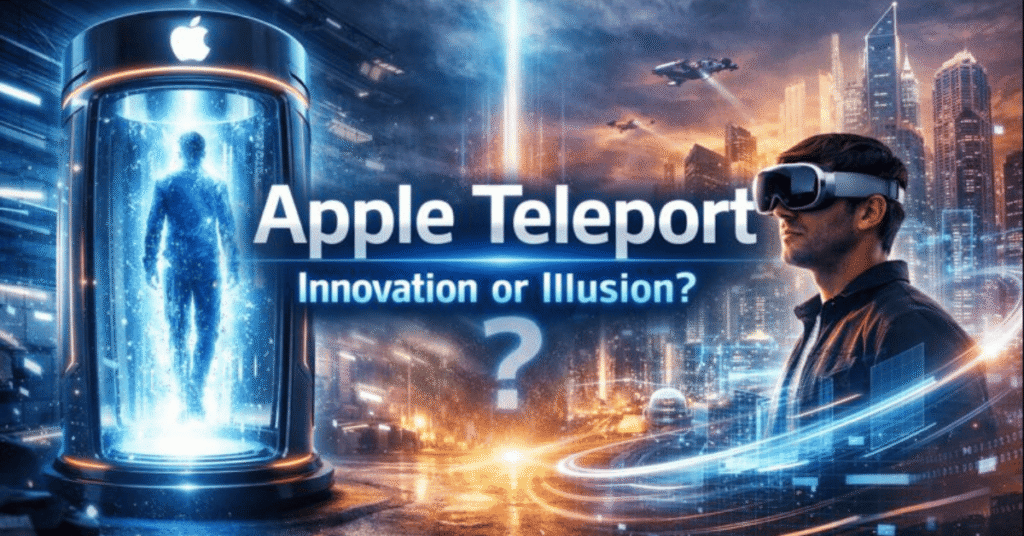
Apple Teleport is not real. It’s more of a viral hoax that neve r really existed that can be traced back to some speculative writing around potential Apple products, twisted Apple innovations, and over-hyped marketing language being circulated on the internet.
“Apple Teleport” The name is used to refer to hypothetical technology in which Apple would provide the ability to transport people, or things, physically, instantaneously through the manipulation of hardware, AI, or some form of quantum processing. Still, no believable piece of Apple documentation, no patent release, no keynote slide, no developer announcement has made a reference to such a product.
In truth, Apple Teleport is simply a fantasy term used for Apple’s actual advancements in spatial computing, augmented reality (AR), virtual reality (VR), and immersive digital environments. These systems may simulate presence or travel, but they don’t identify themselves as teleportation.
Is Apple Teleport Legit
From the point of view of facts and science, Apple Teleport is not real. Apple has not suggested it is working on teleportation technology in the real sense.
What is confusing~ sometimes about Apple is its dominance in high-end visualization technology. Products such as Apple Vision Pro, ARKit, and LiDAR-based spatial mapping provide users with the ability to step into hyperreal digital environments that are immersive and location-independent. To any casual viewer, these experiences may seem “teleport-like,” especially when tested out in short, chop-chop YouTube clips.
The validation of technology is having official announcements, publishing peer reviewed papers and the runaway success of demonstrated technology. Apple Teleport meets none of these requirements, making it nothing more than an internet concoction, not real innovation.
Market Statistics: The Real Numbers Behind Spatial Computing
Teleportation may be fiction, but the spatial computing market is real and growing fast. Global funding for AR, VR, and mixed reality technologies has increased substantially during the past ten years.
Reports from the industry reaffirm that spatial computing hardware is on track to be the key pillar of future digital interaction. Immersive tech is being widely embraced in sectors like healthcare, education, architecture, gaming and remote collaboration. Apple, Meta, Microsoft, and Google — among the biggest tech companies in the world — are pouring billions into research and product development in this space.
There’s speculation that this growth could be a sign. “They see the big money, they see the fancy prototypes, and they assume that breakthrough science is just around the corner.” It’s a more subtle reality: spatial computing is about augmenting perception and interactivity, not moving people.
Origins of the Apple Teleport Myth
The Apple Teleport myth originated as a concoction of clickbait headlines, speculative tech blogs and creatively cut videos on social platforms. Initial posts capitalized on Apple’s brand authority to lend credibility to hyperbolic claims.
A few creators stitched together Apple product launch videos with unrelated science fiction imagery. Some created sequences that mimic teleportation scenarios using agents-generated visuals or video effects. Slowly, these content were repeatedly shared without the original context, and a good number of audiences began to believe in its authenticity.
The myth was stoked by the fact that Apple is associated with many unexpected innovations. This line of thought gave it a convincing feel even without any proof.
Common Misconceptions About Apple Teleportation Technology
A frequently repeated myth is that “advanced visualization” is the same thing as actually physically teleporting. Many (if not most) of the users seem to be under the impression that Apple, because it renders photorealistic scenes, can also transport matter in space.
Another misconception is that Apple patents signify products about to hit the market. Apple does apply for exploratory patents, but patents do not equal working technology or even solutions table-ready.
And some people also say that AI could ignore the rule of physics. AI is really about better data processing, perception, and simulation, not ignoring the rules of physics.
Real Apple Technology Behind Video Illusions
Several real Apple technologies are frequently portrayed as teleportation devices. Spatial computing enables digital objects to exist as if they were native to a user’s physical space. When such changes of environment or perspective occur instantaneously, it’s like travelling through space.
Apple’s LiDAR sensors precisely map the environment for perfect alignment of digital content with real-world surroundings, allowing for effortless transitions between digital scenes. In conjunction with high-resolution displays and real-time rendering, the switching seems clean and immediate.
But these experiences are still all digital. The user’s body remains stationary, and no matter is moved. The illusion is powerful, but it is still an illusion.
How Social Platforms Amplified Apple Teleport
Social media algorithms are designed to promote engagement, not accuracy. Futuristic or shocking content goes viral very fast, irrespective of whether it is true or not. Apple Teleport videos frequently employ sweeping visuals, rapid-fire edits, and authoritative voiceover narration to build credibility.
A few viral posts take off, and then recommendation systems help amplify them even more. The upshot is that millions of users see the same false narrative over and over again, reinforcing belief through repetition.
This crescendo effect is a clear demonstration of how easily fiction can masquerade as fact in today’s content ecosystem.
Apps Misleading Users with Teleport Branding
A few mobile apps and browser extensions have embraced the term “teleport” to jump-start downloads. These apps typically include virtual backgrounds, video transitions or AR filters.
Without making any direct claims to run afoul of the law, the branding hints at powers far beyond what the app actually offers. Users, who don’t read full descriptions of the apps, may feel cheated after they install.
This is an example of how it’s often marketing language — not actual technology — that breeds misconceptions . Apple has no connection to these apps, but its name is often used tangentially to lend a veneer of credibility .
Scientific Reality of Teleportation Technology
From the scientific point of view, teleportation is only theoretical and experimental at this point, and mainly for the quantum level. “Quantum teleportation” relays information about the state of a particle, and not the particle itself.
Teleporting a person or object would entail breaking down matter at the atomic level and reassembling it elsewhere — a process that still lies in the realm of science fiction. The power and data requirements – not to mention the ethical problems – mean it’s not feasible.
Apple, like every other technology company, is subject to the laws of physics. Spatial computing makes for better experiences; it doesn’t rewrite reality.
Artificial Intelligence in Creating Apple Teleport Content
The Artificial intelligence has greatly contributed in the proliferation of Apple Teleport rumors. AI generated images, deepfake-style videos and synthetic voiceovers make fictional demonstrations seem real.
Tools that once were the province of professional studios are now in the hands of anyone with a smartphone. This democratization of content creation enacts a kind of blurring between demonstration and deception.
And as AI develops, so too does the need to fact-check, for viewers and readers on both sides of the equation.
Verifying Information in the Digital Age
The Apple Teleport phenomenon shines a spotlight on the importance of digital literacy. Confirming the information means checking with official company sources, reputable technology publications, and scientific consensus.
Apple conveys significant changes through tightly controlled channels — keynote events, press releases, developer documentation. If a revolutionary technology like teleportation did exist, it wouldn’t be announced via random social media videos.
Critical thinking, skepticism, and source evaluation are key to successfully navigating today’s information environment.
Lessons from the Apple Teleport Phenomenon
This phenomenon has a few lessons to teach us. First, powerful branding can make even the most far-fetched ideas seem believable. Second, virtual experiences can be mistaken for real-world breakthroughs.
But it is, above all else, a reminder of how misinformation travels faster than corrections. Once a narrative takes hold in the public imagination, the facts often can’t keep up.
These explanations enable users to better understand and serve their technology needs and help them to be more savvy consumers of technology news and digital media.
Final Thought
Apple Teleport is not an actual product or technology, but it serves as a compelling illustration of how innovation, imagination and disinformation can converge. Apple’s spatial computing innovations are real and impressive—but transformative in their own right, even if you strip away the hyperbole and hype.
Fact is fiction distilled, and when you can distil fact and fiction you can rightly be impressed by technological real progress whilst you laugh at the expectation of having your term realistically teleported to you. While the future of spatial computing is certainly exciting, it remains well tethered to the present, and not darting off into teleportation fantasy.
FAQs
1. Does Apple have a product called Apple Teleport?
No, Apple Teleport isn’t a real product or technology from Apple. It’s a viral concept created out of online speculation, edited footage and social media hype. Apple hasn’t announced, much less demonstrated, a means to teleport.
2. Why do videos show teleport-like experiences with Apple devices?
The videos deploy a mix of augmented reality, spatial computing, and video editing effects to simulate teleportation. The technology gives the impression that changes and moves happen instantly, but there is no actual moving of location.
3. Is teleportation scientifically possible today?
At present, the teleportation is only in the quantum experiments which transfer the particle information rather than the physical matter. Teleporting people or objects is still just theoretical, and a long way from practical application.
4. Are Apple Vision Pro and teleportation related?
No, Apple Vision Pro immerses you in a spatial computing experience where you feel like you are in presence in other environments. Though it can simulate the experience of motion, it cannot transport material goods or people.
5. How can users avoid falling for tech misinformation?
Users ought to trust in official statements, reputable tech reigns and legitimate sources when assessing claims. Critical thinking and fact checking are important, particularly when it comes to viral content that overhypes or misrepresents technology.
About the Author