If you’ve ever dabbled in Source Filmmaker (SFM) then “SFM compile” is not an unfamiliar phrase. But what is it, and how does it relate to the rest of your process in making movies? Compiling models for SFM can be intimidating at first, but after a little guidance you should be able to create what you imagine in no time. Whether you are looking to create beautiful animations or just want customizable assets for your projects, compiling models is a good skill to have for any SFM user. Check out this in depth guide as we explain everything you need to know about compiling, including what tools you need and how to fix errors. Let’s start your journey to SFM compilation mastery!
What Does SFM Compile Really Mean?
SFM compile is the process of turning a 3D model file into a file that Source Filmmaker can read and use. This conversion is necessary to be able to use custom models in your SFM files.
When you compile a model, you are packaging it up for use in animation and rendering in your software. The procedure binds a number of elements such as textures, materials and physics together so that they can be used in the work flow.
Compile is not only make models visible, you can make models with motion. A complete compiled model will crumple exactly right when you crush it and will react perfectly to any other scene moves.
In addition, it gives artists the opportunity to produce unique assets narratives rather than using the standard fare. Learning this basic principal will allow you to do many different creative things in SFM filmmaking. With each successful compile you just gain more power over the tools and telling story.
Key Tools for SFM Compile
To have good models to work with in Source Filmmaker you need to have a certain set of tools. These make the process simpler, and more foolproof.
First up: Crowbar, one of the most versatile compiling tools. The application makes it easy for you to compile multiple models at once using a user-friendly interface.
Then, there’s MDLDecompiler. If you want to alter or study existing models – this is the tool to decompile them. It’s the must-have for any newcomers who wishes to see how the engine “ticks” underneath.
And of course, don’t forget about Notepad++ or any good text editor to edit your QC files. Having a desk that’s clutter-free will make your writing and editing a lot more pleasant and productive.
Be sure to have working version of Source SDK. It contains everything you need for compiling models and playing them in SFM, hassle free.
Here is a quick pros and cons:
| Tool | Pros | Cons |
| Studiomdl | Free, official, fast compile | Command line only, no GUI |
| Crowbar | GUI, decompiles too, simple | Occasional bugs on big files |
| HLMV | Live preview, bone viewer | No editing, view only |
Types of Files You Compile in SFM
During the building process of Source Filmmaker, different types of files are used. Knowing these files is necessary for a smooth production of animations.
The models are the most important. These are usually .mdl files, which contain the geometry and animations of the model. You’ll often see them paired with .vvd and .phy files that handle vertex data and physics properties respectively.
Textures are important in SFM compiles as well. Standardised formats like .vtf (Valve Texture Format) makes sure your models look their best on screen.
And the materials Files! The material files (.vmt) control the way in which textures react to different lighting in engine.
Sound files can add to your scenes, as well. Formats such as .wav and .mp3 make the visual experience of your story even more immersive for the audience. These all combine to offer a lively experience in SFM projects.
How to Prepare Files Before SFM Compile
Before getting started with the SFM compile, you want to make sure your files are ready. This preparation could really make a difference in whether you win or not.
First, let’s make sure we have a tidy folder with all the model files. Place any textures and materials required into the folder with the model to stop any confusion further along the line.
Then make sure your models are rigged and skinned correctly. A good model can save you a lot of time while compiling.
Naming conventions your witness! Be sure to use descriptive names for everything so you can easily tell what each part is when you need to trouble shoot or edit in the future.
Make sure you have all the scripts and configuration files you need. Missing parts could cause frustrating errors later on.
Make sure you are working with the right formats for everything in your project. Doing this also will make your compile less confusing and more successful with SFM!
Editing Your QC File Right
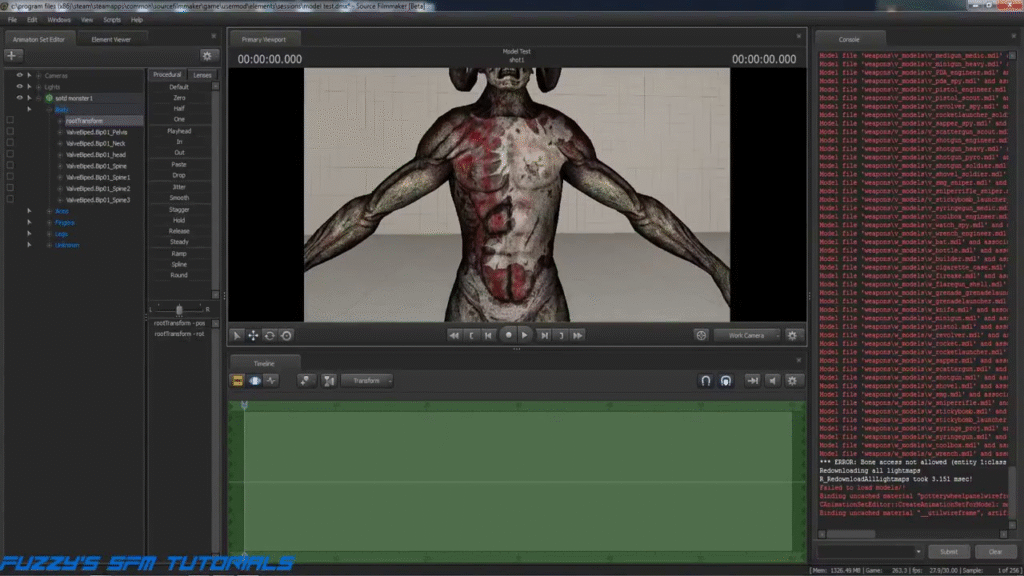
Editing your QC is a vital part of the SFM compile. This one file, called “QC” (quarterly check), decides how your model is going to look and act in Source Filmmaker.
Open QC file in any text editor first. There are several sections, which describe different properties of your model, including materials of the model, collision with the model. Model line, Please watch it closely, As it tells SFM where the compiled model is.
Then make sure to add right paths for textures. Absent or wrong paths will cause errors that frustrate.
And again with the hitboxes – you want to make sure those are properly defined or they don’t feel right in s&f-m scenes. Your QC file will be much more readable and it will be easier for you to keep track of your changes over time.
Taking these steps seriously leads to a successful compile and a smooth workflow thereafter. So performing them properly leads to successful compiling and smooth workflow, too.
Fixing Textures and Paths Early
When using Source Filmmaker, correcting textures and paths early can save you a ton of headaches later on. All appearance files and texture files must be properly referenced to the model before it is compiled.
Begin by verifying the paths in your QC. Make sure that is is leading to the right place, that it say correctly points to the place, path wise, that your texture is in. Invalid paths generate, missing or default materials, which can destroy the look of your project.
Now check if you have all texture files in your project folder. If you want to keep things organized, you can also put them in a folder, so they’ll be nice and neat when you compile.
Also make sure you’re using accepted formats such as VTF for textures. This will avert any errors at compile time and make sure SFM can read everything nice and clean when you come to import your model. These precautions will help to a smoother workflow without any surprises later on!
Step-by-Step Guide: How to SFM Compile a Model
First, get your model files. Have your source files ready, such as .mdl, .qc, and texture files.
Then open your favorite text editor. Open the .qc for editing. This is what determines how the model is compiled into SFM.
Modify the paths in the .qc to refer to the correct location of your textures and materials. This is a typical error that will cause missing textures.
When everything is ok, run a command prompt or terminal. Go to your compiler.
Execute the compile command, using “studiomdl” with your modified .qc filename. You should now have new output files which can be used in SFM, if all went well.
When the compiling is done without errors, time to see if it works magic in Source Filmmaker’s world.
Run the Compile Command
Now your files are ready to be compiled, so let’s go ahead and run the compile command. Launch your favorite compiler. This can be Crowbar or any other software designed for SFM.
Find the folder containing your model files. Enter the appropriate commands in the terminal or command prompt. Make sure you include any necessary arguments exist (e.g paths, options, etc.) pertaining to your models.
Progress indicators will show up as the compile begins. Look for any error messages during this process, they can tell you what you need to fix in your files.
You will be notified when compiled successfully. If all goes well, you are one step closer to putting those models in Source Filmmaker! Be patient — compiling can take a bit of time depending on the complexity and the size of your files.
Test and Import to SFM
After compiling your model, now test your model and import it on Source Filmmaker. This stage is critical in ensuring the success of the process.
Start SFM and from the “File” drop-down menu go to “Open”. Click “Import” and find your compiled model files. Watch for any error messages that may appear as they will tell you often tell you what is going wrong.
After you’ve imported it, check to see if your model successfully loads in the viewport. Pan around, rotate it, and look at its textures with your own eyes. If something looks off, you might have to go back to earlier steps and/or change some settings in your QC file.
Testing isn’t just visual — it’s functional, too. Try animating the model for a moment to see if all of the bones work. A smooth animation suggests a successful compile!”
Top SFM Compile Errors and Quick Fixes
When compiling models in Source Filmmaker, errors can be generated at any time. One common problem is the Missing VVD or physics file error. That usually means that your model doesn`t have the files required for physics. To correct this make sure you create a valid physics model when you compile.
Another common problem is texture path related issues. Check the paths of the textures if they are not loaded. They should be exactly equal to the path where is stored in your system.
Occasionally, compile errors are caused by wrong bone names, or missing reference animations. Check that each bone name follows the SFM conventions and that you have access to all referenced animations.
Addressing these things early on will save you headaches later and keep your project moving! Watch for typos Always be on the lookout for typos, as even the smallest errors can cause major headaches when compiling.
| Error Message | Why It Happens (My Fail) | Quick Fix Command or Tweak |
| Missing VVD or physics file | No collision compile; I skipped $convexhull | Add $convexhull to .qc or run smd2phys |
| Texture not found | Wrong .vmt paths; my ports mismatched folders | Edit .vmt: $basetexture “models/my_model/diffuse” |
| Invalid CDMaterials path | Backslashes or absolute paths in .qc | Use forward slashes: $cdmaterials “models/my_model/” |
| Error opening .smd file | File moved; I reorganized mid-compile | Check .qc paths match exact folder spots |
| 64-bit Studiomdl crash | Old 32-bit tool on new Windows | Switch to Crowbar or 64-bit SDK version |
| LOD generation failed | No $lod in .qc; distance views broke | Add $lod -1 block with switch values |
Missing VVD or Physics File Error
The “Missing VVD or Physics File” message can be a real pain when compiling models on Source Filmmaker. This problem can be caused when the required files are not “linked” properly as a result of this operation.
The VVD stores the vertex data, which is needed for model rendering. If this is missing, your model will not look as you expect it to. Can you verify that the path is correct and the file is where you expected to find it?
Physics files on the other hand are a defining how models physically react in SFM. Lack of these can cause all sorts of odd behavior and crashing. Make sure you either compiled a physics model separately, or you included one in your main compile command.
A quick fix for this error go back into your QC file settings, and make sure every file it calls out is where it expect to be. Checking paths now will save you headaches later.
Texture Path Problems
Texture path errors can easily ruin your compile in SFM. When a model can’t find its textures, it creates a very annoying visual situation. This may occur if texture file paths are wrong, or the texture files are missing.
As a first step to solve this problem check your project directory structure. Confirm that all the textures are in the right place in the directory. If you’ve relocated any files, change their paths in the qc accordingly.
Another common pitfall is that of naming conventions. Texture names have to be exactly the names referenced in the materials section in your qc file or it will error out when you compile.
You might be able to check if your textures are properly formatted or if they can be reached, using tools like VTFEdit. Keep your workflow organized always, processing labels towards the end will make it easier for you to troubleshoot these problems later on.
Pro Tips to Master SFM Compile Every Time
To get used to SFM compile, you need to learn to keep your workspace clean. A clean directory structure will save you time and headaches. Keep your models, textures, and scripts separated in different folders so you can easily find them.
Always double-check your QC file options before you compile. Make sure the paths are correct or you will get needless errors. This little function can make all the difference in the procedure.
Use batch files for automation. Write a simple script to run multiple commands and make your work more efficient.
Keep up with the latest tools and timely resources in the SFM community. Perhaps there are new plugins/updates that would improve your workflow and/or fix that niggling problem you keep running into.
While we’re at it, don’t be afraid to try various model formats and compression methods to get the best performance without sacrificing quality. The more you’ll tinker, the more you’ll get better (master) at SFM compile!
Speed Up Your SFM Compiles
Speeding up SFM compilation can definitely save you a lot of time and frustration. One good way to do that is to pre-optimize your models. Make sure textures are not too big or too detailed for what you need.
Use things like Crowbar to compile quicker. It streamlines and eliminates bottlenecks in Git compilation, making it possible to quickly iterate.
Another tip, reduce the amount of materials in your models files. The less materials you have the less overhead You’ll have compiling, so the result will be faster.
If you have a multi-core system, you may want to try using multiple cores. Compiling using multi-core processors has major performance benefits.
Always work from an established clean environment, with consistent file paths and file names. This subtle modification reduces unnecessary confusion and brings a lot of cohesiveness to the whole working/presenting on complex projects.
Conclusion
SFM compile knowledge can open the door to creative possibilities. With every model you manage to compile your know-how increases.
Remember: Practice makes perfect. The more familiar you are with the procedure, the less thought it will require. Feel free to play with models, settings, etc.
Find other people passionate about this, get some resources and communities. Talking to people about this will not just enhance your experience, but also inform you about the mistakes that many have made before you, and other more advanced know-how.
With a bit of effort and a curious attitude, you will be sliding around SFM like a pro before you know it. So go for it, try out some new concepts, and have fun!
FAQs
What does SFM compile mean?
SFM compile is the act of taking 3d model files and compiling them into something Source Filmmaker can use. There are multiple stages including model preparation and textures, QC editing and compiling.
What tools do I need for SFM compiling?
The important tools are Crowbar for compiling models, Notepad or any other text editor for editing the QC files and a suitable version of Source SDK. They are critical for smooth compiles.
Can I compile any type of file in SFM?
You mainly build .mdl (model) files, along with associated materials and texture files. Other formats might need to be converted first.
How should I prepare my files before compiling?
First,you should organize your model files in a good way. Make sure all the necessary textures are available in the proper folders. Verify paths in your QC so that they correctly point to the textures.
Why is my compiled model not showing up in SFM?
This may have been caused by missing physics (.vvd) or texture mapping errors. Always just make sure that everything you needed to be compiled was actually compiled and imported into SFM.
Are there common errors during compilation?
Yes! Missing VVD or physics file errors are fairly common as well as bad texture paths. Both of these are generally fixed by thoroughly reviewing your QC.
How can I speed up my SFM compiles?
To get things moving faster, make sure you have clean folders with no clutter and only the necessary assets you need for the building process. Good organization is half the battle!
Is there anything else I should know about mastering SFM compile?
Practice makes perfect! The more you know about different models and configurations, Workshopping different configurations and settings within Crowbar will also help you learn over time.
About the Author






I couldn’t resist commenting. Very well written!
Thanks