
In a fast-changing world, the secret to success isn’t just what you know how to do; it’s what you know how to become. Consider capability as your personal toolkit—not just what you can do, but how well you can adapt when the going gets really tough. For individual contributors charting their careers and leaders responsible for the success of their organizations alike, knowing how to build capabilities is vital to sustaining success. What if I told you that you could build the foundation for smarter growth by investing in yourself and your team? This path isn’t simply about enduring today’s obstacles; it’s about arming yourself to capture tomorrow’s possibilities. So go on, let’s explore why capability is the ultimate game-changer you’re looking for!
What Does Building Capability Mean?
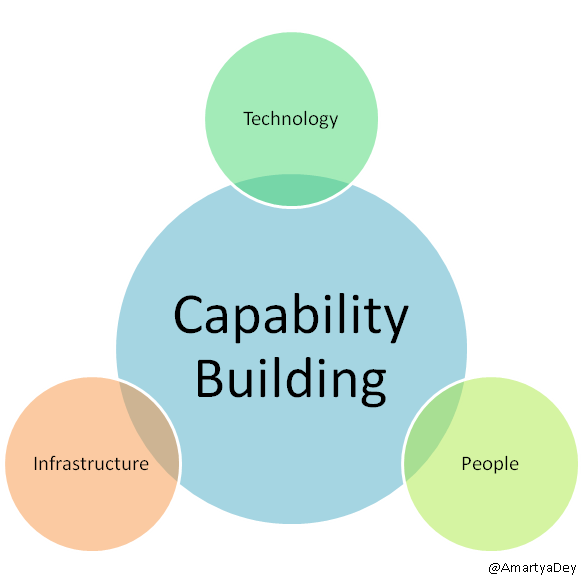
Capability development is more than just learning skills or knowledge. It’s learning how to use what you know to get things done. It involves adopting a learning and adaptive attitude.
In essence, capability development is about increasing your potential. Doing things well is not good enough – knowing when to do them and when to change your mind for the sake of better results is equally important.
It’s a process, frequently accompanied by reflection, practice, and input from colleagues. It takes a willingness to change and a willingness to get out of your comfort zone.
For the company, this means delivering a work environment that supports both learning among employees and cooperation. Developing capabilities isn’t a box to tick; it’s a continuing path of growth and reinvention to make sure that you’re always up to what’s next.
Building Capabilities: The Smart Path to Sustainable, Long-Term Growth
Building capabilities is one of the most effective ways to achieve sustainable success. Instead of focusing only on short-term results, individuals and organizations that invest in developing their skills, knowledge, and systems create a strong foundation for the future. When capabilities grow, people become better at solving problems, adapting to change, and creating new opportunities. This approach not only improves performance today but also prepares them for challenges tomorrow. In the long run, capability building leads to smarter decisions, consistent progress, and lasting growth.
Why Developing Capabilities Matters More Than Chasing Quick Success
Many people focus on quick wins and instant success, but these results often fade quickly. Real and lasting progress comes from continuously developing capabilities such as learning, critical thinking, communication, and leadership. When individuals focus on improving these abilities, they become more resilient and better prepared to handle complex situations. Capabilities act as long-term assets that keep delivering value over time. Instead of temporary achievements, capability development builds a strong pathway toward consistent and meaningful growth.
From Skills to Strength: How Capability Building Creates Lasting Impact
Skills are important, but when they are continuously improved and combined with experience, they turn into strong capabilities. These capabilities allow individuals and teams to perform better, innovate, and stay competitive in a changing world. By investing time in learning, practice, and improvement, people transform their skills into long-term strengths. This process creates confidence, adaptability, and the ability to achieve bigger goals. Ultimately, capability building not only improves personal development but also creates a lasting positive impact on careers and organizations.
I’m Building Capabilities Because I Want Long-Term Stability
Developing capabilities is not simply a matter of short-term returns. It is a long-term game for stability. In a volatile world, a well-rounded skill portfolio is a source of comfort.
Sure, when I work on my skills, I am getting ready for the future. Every added skill adds another buffer to my professional life. This kind of thing makes me feel confident in the face of uncertainty.
And building capabilities also makes it easier for me to adjust when there are changes. Whether it’s new technical expertise or interpersonal skills, every step makes me stronger in the job market.
Long-range stability is more than just weathering the storm – it’s growing in the storm. By continually growing and honing my expertise, I’m preparing a solid foothold for the future — one that will keep me ahead of shifting industry patterns and economic volatility.
The Hidden Skills You’re Overlooking: Why Capability Starts with Self-Awareness
Self-awareness underpins all development of competencies. Some are not aware that they have this skill, and in the end of the day, Having Awareness can open up windows to growth in many different areas.
Knowing your strengths and weaknesses provides a good basis for capability building. When you have clarity on what you are good at, you can prioritize learning and skill building around those areas and also your gaps.
Acquiring Patience and Learning from Past Experiences. You May Have Been Good At Conflict Resolution and Not Even Known That That’s Something That Can Help With How A Team Works Or Maybe You Got Really Good At Creative Problem Solving When You Were Working Through Some Really Heavy Projects.
To embrace self-awareness is to recognize emotional intelligence. This leads to improved communication and teamwork with the other people in your life, bringing you closer to a mutually beneficial and fruitful arrangement.
From developing self-awareness, you can open up potential avenues of learning and adapting to the environment around you. It promotes a lifelong process of learning and becoming an excellent human being at many different areas of life.
The Importance of Building Organizational Capability
Result
Developing capabilities within the organization is critical if companies are to be successful over time. It enables enterprises to evolve and prosper in a dynamic market environment. When organizations focus on that development, they create an environment where innovation and agility are the norm.
Employees are empowered to act. They are given high-value learning opportunities so they know that they are appreciated. This raises team morale and overall team output.
Building capabilities, in turn, enables companies to cut through the chaos and focus on efficiency. It builds a foundation that aligns with strategic goals and can also support change.
In addition, solid organizational capability= talent acquisition. They want professionals to grow- and people don’t just leave work for better pay, they leave for better(working)conditions; hiring becomes easier,& turnover decreases, so the strong org moves in a virtuous circle& employee happiness is high.
The development of these capabilities also provides the organization with the means to ride out market upheaval and continue to flourish in the long term.
The Skill You Think Is “Nothing” Might Be Someone Else’s Superpower
It’s easy to overestimate your own abilities. What’s routine to one person is remarkable to another. For example, the capacity to relate to others is often regarded as a straightforward characteristic. However, in a certain situation, it is the greatest strength.
Think about the last time you answered someone’s question or helped them work through a problem, drawing on your natural empathy or communication style. That skill might seem trivial, but it could be pivotal in team dynamics or client relations.
On the other hand, there may be people with technical skills that sound fantastic on paper, but they do not work in practice. You’re not just some schmuck; your “nothing” skills can fill gaps where traditional expertise cannot.
Appreciating different types of value leads to greater teamwork and creativity. Own what you bring to the table; it may just significantly impact someone else’s road.
I’m Building Capabilities to Stay Competitive in a Fast-Changing World
In the blustery changes of today, being relevant means evolving. The terrain changes by the day, so do we. Developing capabilities is my answer to this breakneck pace.
I concentrate on acquiring new skills that keep me on the leading edge. From learning a new digital tool to enhancing emotional intelligence, each skill I gain makes me more adaptable.
Connect: Searching diverse professionals can add new views as well! Being surrounded by forward-thinking minds stimulates creativity and inspiration.
And a commitment to continual improvement means I can also turn on a dime when confronted with obstacles. A new skill is like a brick in the foundation of resilience.
With industries changing so fast, it is the ability to react that separates the wheat from the chaff. It converts uncertainty into opportunity and ensures I am not simply surviving but thriving in a constantly changing world.
Why Capability Matters at Work
Workplace capability is fundamental to innovation and success. If the employees in an organization have a range of skills, then they can approach problems in a more imaginative way.
Competent businesses are nimble businesses. They are agile when customer needs change and when new technologies arise. It’s this kind of agility that keeps you from becoming irrelevant.
In addition, the development of the capabilities encourages the team work. People’s different strengths are pooled to produce holistic answers that improve the whole company.
Capable-first workplaces are also able to bring in leading talent. People want to work (or continue to work!) in places where they can advance in their career.
There are higher engagement levels with the capabilities of employees as well. The synergy between personal growth and the growth of the organization nurtures team members’ sense of worth and results in a workforce that is motivated to perform at its best.
What Is the Importance of Capability Building?
“Capability building is a prerequisite for growth both at the individual and at the organizational level.” Being confident and secure is not just about learning new things; it’s about building up your resilience and adaptability. In an era of rapid change, those who build up their capabilities find themselves in a better position to deal with the unknown.
The development of capabilities increases our ability to solve problems. People with more tool kits have more options to solve problems quickly. This forward-thinking mentality breeds creativity, innovation, and momentum for those who work within teams and organizations.
Capability building also encourages collaboration. People who know their strengths can collaborate effectively and capitalize on each other’s strengths.
Those are the kinds of environments that build up capability. This not only attracts the best talent but also retains employees by supporting their professional growth.
What is important is empowering people to achieve all they are capable of while making meaningful contributions to their workplaces and communities.
Capabilities Turn Problems Into Growth Pathways
Every problem is a chance to get better. As you develop capabilities, you arm yourself to address those challenges with more strength and clarity.
Think about an issue you’ve recently had to deal with. Don’t look at it as a roadblock; look at it as a possible detour. Every challenge is an opportunity to build your knowledge and skills.
Take, for example,e building emotional intelligence under pressure. “This skill turns conflict into a meeting of the minds and can help workplace relationships.”
In addition, adaptability gives teams the flexibility they need to adjust when the market changes. What is imperative for organizations that foster capability development is that they give employees the ability to bounce back.
This being in place, this response to adversity transforms adversity into wisdom, producing a culture that continuously renews itself. The more you build your capabilities, the more nimble and creative you’ll be when the next barrier comes up.
I’m Building Capabilities Because I Value Personal Freedom
Developing capacity isn’t just about getting better at skills; it’s a path to liberation. When I invest in my development, I gain more options for myself.
Every new ability opens doors that perhaps were previously closed. “That empowerment allows me to live my life with less restriction and more control over the choices I make.”
With new tools and abilities, I felt less beholden to the paths of old. Whether it’s learning a new tool, brushing up on soft skills like communication, or more, I continue adding layers to my autonomy.
I can use that to confidently handle whatever comes my way. Freedom of the individual becomes freedom through Resilience—something every competent person should cultivate.
In an age where the only constant is change, having a wide range of skills enables me to avoid being pigeonholed into just one job or one identity. “Now that I’ve earned the right to do my own thing with all the things I’ve accomplished.”
Overcoming Common Challenges to Building Capability
Building capabilities, however, is not without its challenges. One typical barrier is fear of failure. Many people are reluctant to leave their comfort zone for fear of making mistakes that will make them look bad. For example, adopting a growth mindset could change this view.
There’s also a time-management hump to overcome. It can be difficult to find the time to focus on developing your skills with so many other demands on your time. A series of short educational workshops can add up to a lot.
Colleague or organizational culture resistance can also make efforts to change more complex, if not more challenging, as a result. Involving your teammates and creating a culture that promotes continuous improvement rather than competition will allow your team to work together on this.
Not everybody, or every organization, may have access to resources. Take advantage of free online courses/community workshops/mentorship opportunities to fill those gaps as well as to connect with others.
Participation in Professional Networks
These exchanges can be transformative in capacity building. These networks also offer excellent access to industry peers and leaders.
Interaction with others broadens your mind to all kinds of new and different thoughts and ideas. You can learn from their experiences in ways the textbooks never state or guarantee.
And a network is, well, a network of people. It creates business relationships and the potential for joint ventures and other collaborative activities that could greatly expand your talents. Potential mentors may be identified to guide your growth path or even stage work with potential collaborators who complement your strengths.
Networking ensures that you are also kept up to speed with what is happening in your industry. Being in the know means you will be able to predict the changes and get with the program so you won’t be left in the dust in that fast-changing environment.
When you participate, you are investing in yourself, as well as adding to the knowledge base of the community. And this engagement, in its give-and-take, elevates all parties involved.
Capacity vs. Capability
Capacity and capability get confused a lot in conversation, but they are not the same thing.
Capacity is the extent to which something can hold or accommodate: ‘how busy can you get at once?’ It’s just like a tank that holds resources, be it time, money or people power. The greater the capacity, the more you can do at one time.
Skill drills further into individual skill and competence. It’s not only what you are capable of doing, but how well, quickly and efficiently you can do those things. Adaptability: For your own individual capacity to innovate and to adapt in any given situation.
So if the capacity is likened to the foundation of a building, the capability then is the construction of the building. You need both to grow: one prepares you, the other checks your readiness.
By being better informed about where to draw the line between them, individuals and organizations can plan more effectively. But you wouldn’t want to carry sand in a cup if what you really need is water, right?
Skills Are Not Enough Anymore — Capabilities Are the New Currency
In the world today, skills alone are not enough. It’s an evolving landscape, and our methods for personal and professional growth need to evolve along with it.
Capabilities are a combination of knowledge, experience, and the ability to adapt. They make it possible for a person to handle complexity with ease. Skills can be taught; competencies are learnt.
Consider: the ability to think critically or change course when confronted with unexpected obstacles is invaluable. These skills create antibodies for unpredictable environments.
Furthermore, as the industries are transforming as per technology and globalization, the organizations need candidates not only skilled but also capable. It’s about being resourceful and creative—qualities that will make you stand out from the crowd.
If you’re going to make it in the future, you ought to spend more of your time upgrading your skills and capabilities.
Conclusion: Capability Building Is an Investment in Every Version of Myself
Developing your capabilities is more than just learning how to do things; it is evolving every part of who you are. Every new skill expands not only your personal life but also your professional life, opening doors to opportunities you never imagined knocking at your door.
Investing in yourself grants you access. That leaves room for flexibility in a world that is constantly changing. You get stronger and more resilient every time you go through something.
This is a deeply personal journey. You tap into hidden reserves of strength and drive. Whether it is through formal schooling or simply educating yourself, the journey results in you becoming a new “you.
Every version of you deserves to be invested in. Becoming a growth mindset leader will help you not only in your career success but in having a fulfilling life full of/options/. In building these capabilities, keep in mind that you’re not just paving the way for your future accomplishments, you’re shaping them today.
FAQs: Building Capabilities
1. What does building capabilities involve?
Capability building is the process by which individuals gain the skills, knowledge and resources that enable them to perform better over time. Building capabilities mandatesself-knowledge, strategic thinking, and learning ongoing.
2. Why is self-awareness crucial in capability building?
Self-awareness enables a person to know what they are good at and what they are not good at. This knowledge enables development to be applied where it really counts for enhancing the individual or the team.
3. How can organizations foster capability building among employees?
Institutions may facilitate the development of capabilities by providing structured training, mentoring, and collaborative environments that encourage the pursuit of ongoing education.
4. Is there a difference between capacity and capability?
Sure thing. Capacity is the upper limit of resources or manpower, and capability is how much of that capacity can be converted into results.
5. Can participation in professional networks aid in building capabilities?
Absolutely. Professional networks provide access to different views, new ideas, and useful skills that can be applied to enhance the individual and the organization.
6. What are some common challenges faced while trying to build capabilities?
Usual roadblocks include resistance to change, lack of time for development activities, and limited availability of training materials or expert assistance.
7. Are soft skills important when discussing building capabilities?
For sure. Soft skills associated with communication, teamwork, empathy, and flexibility play a vital role in one’s effectiveness in an organization and are necessary for long term success.
About the Author






1 thought on “Why Building Capabilities Is the Key to Smarter, Long-Term Growth (Personal Insights)”