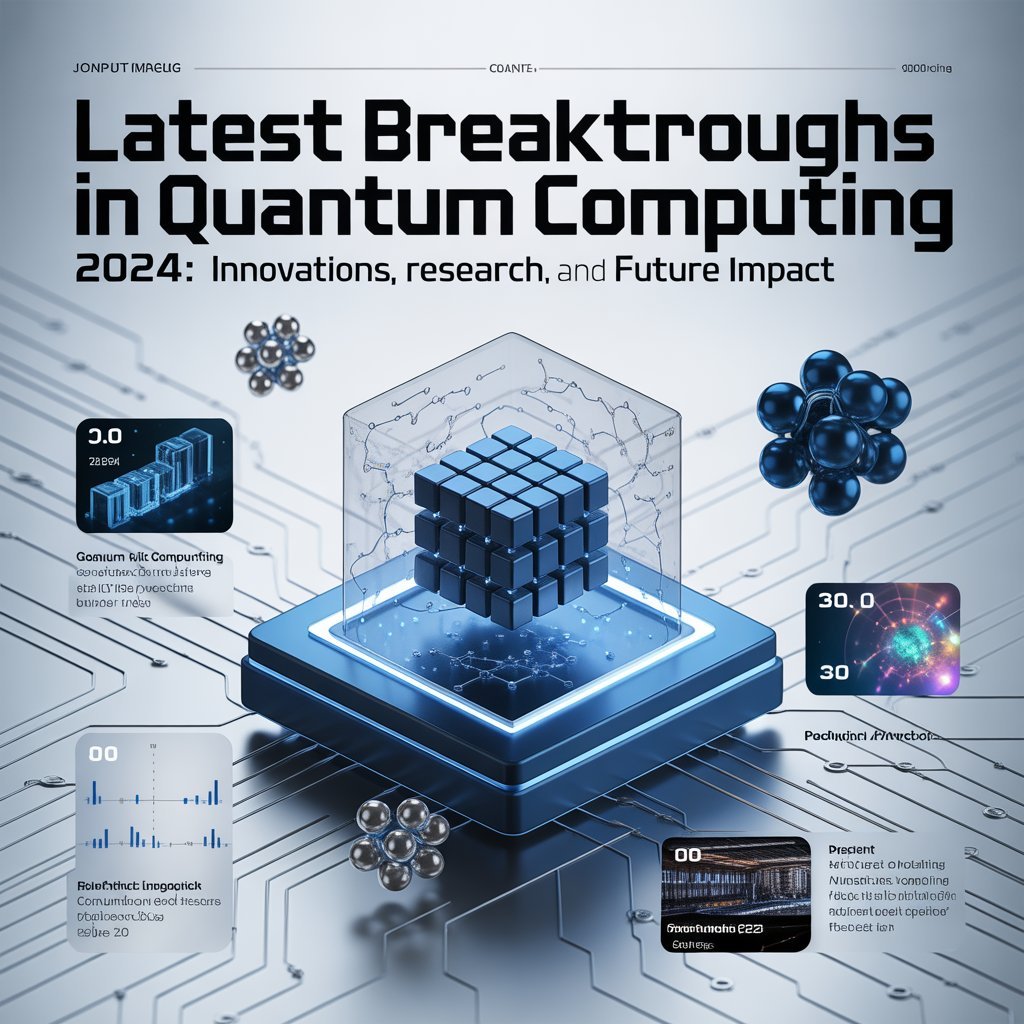
Quantum computing is no longer just an idea in a futuristic sci-fi movie. It is already 2024 and we are living in a time where this futuristic technology is breaking down walls of industry and ever more possibilities. The recent advances in quantum computing are not just interesting, but wonderful things for our future. These inventions — whether they increase computing power or help solve problems — are the stuff of months or years, rather than decades, of potential scientific breakthroughs.
In this blog, we will dive into what quantum computing is, why it is important now more than ever, and look at some of the amazing innovations recently introduced. Strap in as we travel the frontiers of quantum technologies to see how they will come to define our reality in increasingly mind-bending ways.
What is quantum computing?
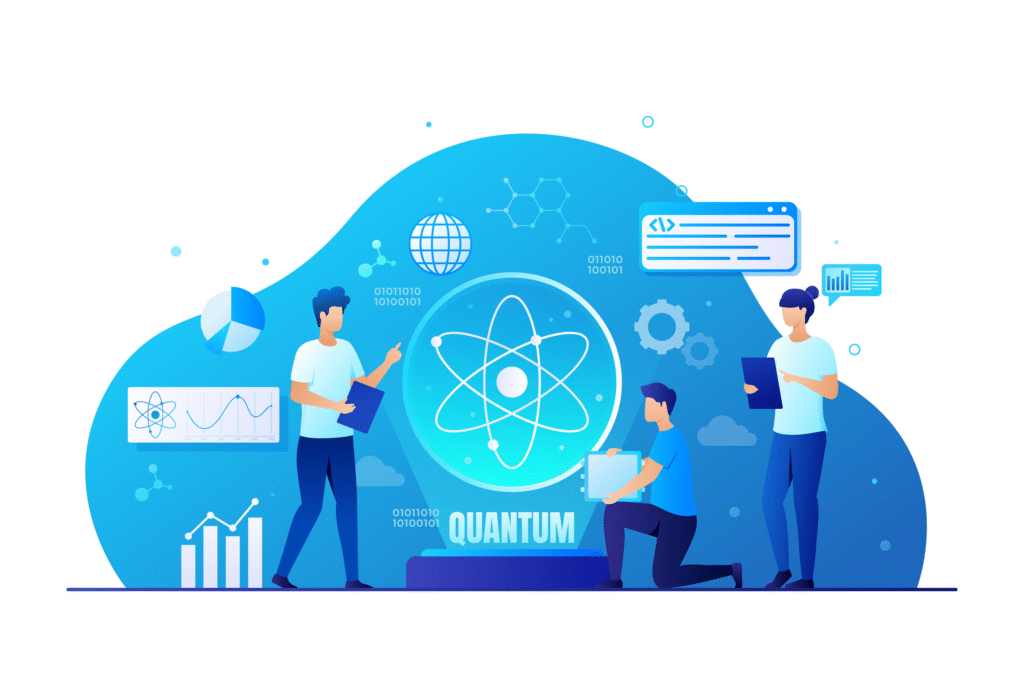
Quantum computing is a new type of computation that exploits the laws of quantum mechanics. Unlike the classical computers, which work on binary bits (0s and 1s), quantum computers work on qubits. Qubits can be in many states at once, due to superposition.
It is this distinctive nature that enables quantum calculation at a pace beyond the reach of traditional calculation. Quantum entanglement also enhances this, so that qubits can be linked in ways that multiply processing power.
Though quantum computing is still in its early days, it could potentially solve problems like cryptography and optimization and even drug discovery — problems for which classical computers are woefully unfit. As the researchers are unraveling its mysteries, we are starting to see how transformative it can be in all sorts of things.
Why does quantum computing matter?
Quantum computing is important because it could enable us to tackle problems that classical computers can’t handle. Things like advanced simulations, cryptography, and optimization can be done in ways we never imagined.
This technology uses quantum bits or qubits that can be in many states at the same time. This enables an unparalleled level of parallelism.
The significance goes way beyond what is taught at the university level. From pharmaceuticals to finance, industries will be able to reap the fruits of the breakthroughs enabled by quantum algorithms.
The pace of computation must keep up as we increasingly head into a data-centric future. Quantum computing provides a peek at how critical problems — including climate modeling and drug discovery — could be solved faster.
With these advances, humanity may pave the way for new solutions that transform what is considered feasible in science and technology.
Is Quantum Computing Finally Becoming Real?
Quantum computing has been a vague and complicated idea. For a long time, it was more of a theoretical entity than a practical technology. But recent progress is indicating that the dream is becoming closer to reality.
Large technology companies are now pouring substantial resources into quantum research. They’ve built hardware and software that previously existed only in academia. This marks a turning point for the discipline.
New ideas have been hatched from both universities and start-ups, stretching the envelope further than most had predicted. Scientists are addressing fundamental problems such as qubit decoherence and error rates with dramatic success.
With such breakthroughs accumulating, the message is: Quantum computing is not just a pipe dream anymore; it’s becoming real. The tantalizing prospect that these advances will bring real-world applications that transform whole industries — and not just ones that we can imagine today — is what makes the momentum behind these developments so exciting.
Why 2024 Became a Turning Point
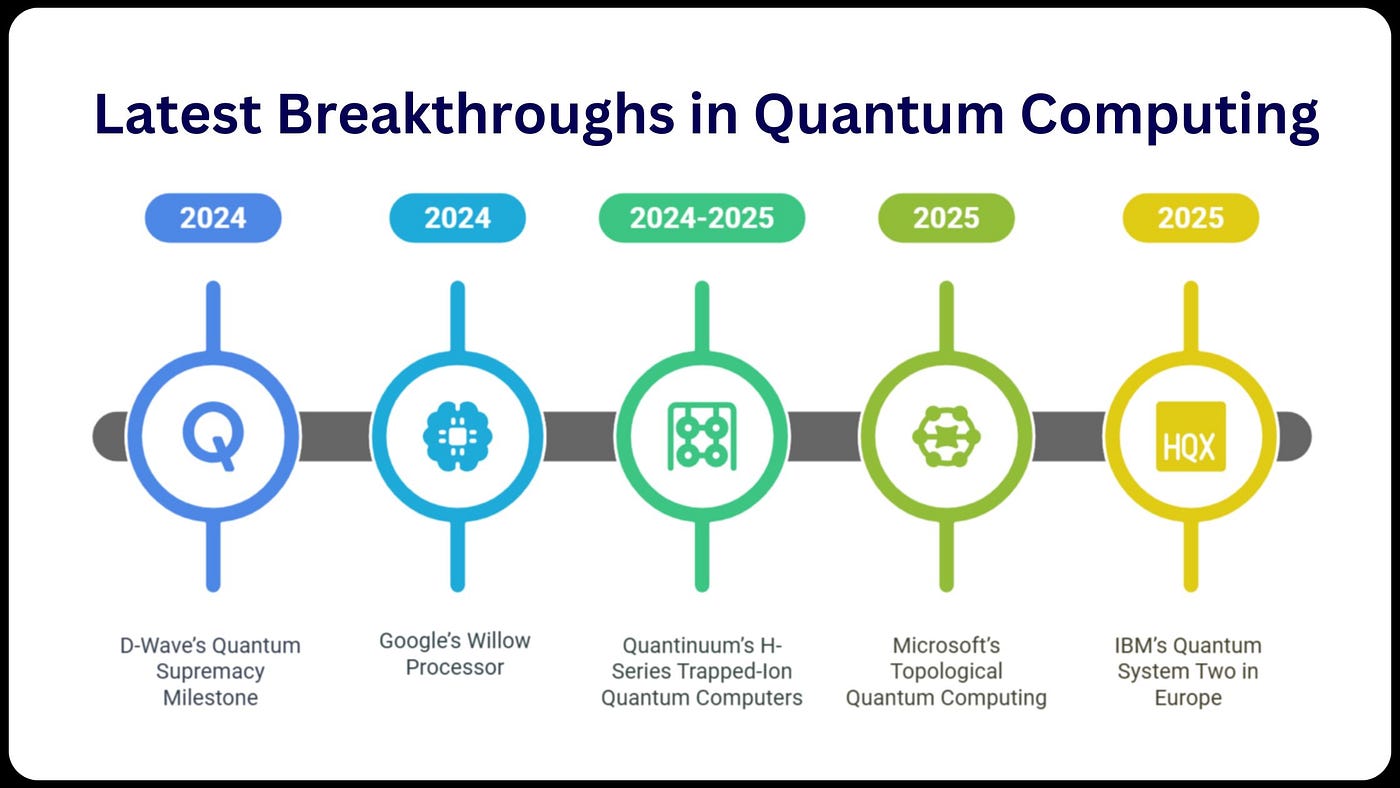
2024 now stands as a watershed year for quantum computing thanks to several notable developments. The researchers are in good shape, from what was theoretical to what’s practical.
The development has been spurred on by increased funding and cooperation between academia and industry. The large technology companies have started to compete for partnerships with research organisations to drive innovation.
The public’s fascination has swelled. As the potential of quantum technology is becoming known to a wider audience, the need for viable solutions is increasing. This increasing awareness stimulates still more funding and research.
Governments across the globe are investing in building quantum infrastructure to enable a quantum-friendly ecosystem that will lead to breakthroughs. Now that regulatory frameworks are shifting in concert with technological advancement, there’s more attention on ensuring that these innovations are usable.
All these things together are what enable economic transformation. Momentum Starting in 2024, exciting developments will emerge that could potentially transform industries and our everyday life.
Breakthrough 1: Quantum Error Correction Improved
Quantum error correction has traditionally been a hurdle in quantum computing. The barriers to achieving that have been significantly reduced this year, needless to say.
Stronger algorithms have been developed that can more reliably recognize and correct errors in quantum states. These developments are important because qubits, which are the components of quantum computers, are highly sensitive to environmental noise.
With better error-correcting codes, one can maintain coherence for longer. This reliability is essential if intricate computations are to be performed effectively.
The implications go beyond theory; real-world applications are beginning to emerge. Sectors that depend on accurate calculations will benefit from these developments as soon as real-world implementations become available.
With continuing refinement of such methods by scientists, we’re getting ever closer to having working quantum machines that can crack problems once thought impossible. The future certainly looks promising with these developments at hand.
Breakthrough 2: Logical Qubits Became Practical
In 2024, the field of logical qubits is revolutionizing quantum computing. Instead of ordinary qubits, which are error-prone, logical qubits use error-correction features that make them more stable and dependable.
This is an improvement, in the sense that calculations can now be done more “correctly” for longer. Scientists have introduced schemes to information that makes it more fault tolerant.
The implementation of logical qubits in practice enables solving complex problems that were deemed impractical to solve. And the industries like pharmaceuticals and finance that could massively benefit from this advancement.
We are now entering an era where bigger systems are capable of handling the data effectively, and not being drowned in noise or decoherence, thanks to better scalability. As these logical qubit gatoids mature into the quantum architecture-of-the-future, all seems limitless.
Breakthrough 3: Advanced Quantum Processors

Leading-edge quantum processors are evolving the face of computing technology. They have more features which allows them to do more calculations and perform better.
These processors are based on new materials and new concepts of design that allow to bring quantum computation to a new level. Studies have concentrated on suppressing noise and extending coherence times, important for sustaining qubit states during operations.
New results demonstrate the ability of processors to attack complex problems. This jump not only speeds up problem solving, but also brings us closer to real-world applications in a number of industries.
Since these advanced quantum processors can outperform classical ones at certain tasks, they enable new possibilities in areas such as cryptography, optimization, and drug discovery. The pursuit of ever-faster processing power continues as researchers work towards developing scalable techniques that can fundamentally transform our digital future.
Breakthrough 4: Willow Quantum Processor
The Willow Quantum Processor is a milestone in quantum technology. This new chip demonstrates capabilities never thought possible.
Designed to be a powerful processor, the Willow CPU adopts a new Qubit design. It improves the efficiency of the system engineering significantly by prolonging the coherence time and/or reducing the error rate and ultimately the overall performance.
It’s designed to be scalable. The work marks a significant stepping-stone as researchers strive to build ever-larger quantum systems.
In addition, advanced cooling and heat dissipation technology was integrated to maintain stability during high-intensity running. The innovation lets researchers go deeper into algorithms and applications than they ever could before.
With potential applications from drug discovery to optimization problems that industries are already starting to imagine, the excitement around Willow is definitely real. So, it’s not just a question of speed; it’s a question of being able to do things that weren’t previously feasible, in real time.
Breakthrough 5: Large-Scale Quantum Systems
Large quantum systems are recasting the computing landscape. As researchers address the challenges of scaling, major progress has appeared. Such systems are expected to be able to handle more qubits than any previous.
Recent advances are aimed at improving coherence times and reducing error rates. This advance is leading to better performance. It leads to practical use in many fields such as pharmaceutical, finance, logistics.
In addition, the cooperation between the technology giants and the research institutes promoting the innovation. They exchange ideas that lead to new architectures for massive quantum networks.
” This cross-fertilization is important for developing a strong infrastructure needed for broad take-up. The way they might affect computational tasks could have consequences for the types of industries we have today.
Investors are also looking closely at these moves. More investment is flowing into startups that address large-scale solutions, suggesting a solid market is emerging. Every new advance brings new excitement about the potential of large-scale quantum systems.
Breakthrough 6: Integration with Artificial Intelligence
The combination of quantum computing and artificial intelligence is transforming the way we tackle complex problems. This combination permits the rapid data processing and improved learning capabilities of machines.
Quantum algorithms can process enormous data sets with astonishing speed. Those insights have been previously inaccessible for AI systems. Consider models trained with quantum-enhanced methods that make more accurate predictions using less computing power.
In addition, this combination enables new applications in many areas. From diagnosing healthcare to modeling financial risks, the potential is endless when AI leverages the distinctive features of quantum mechanics.
As scientists further explore this connection, expect to see mind-bending advances that will redefine what machines can do. The convergence of these two technologies is an exciting point of interface in both fields and is causing concern as to what the future may bring, even beyond what can currently be envisioned.
Breakthrough 7: Hybrid Quantum Classical Computing
Hybrid quantum classical computing is widely considered a fundamental breakthrough in computing power. Taking advantage of the best features of quantum and classical computing, researchers have now built systems that can address problems that were previously unsolvable.
It applies the special features of quantum mechanics while keeping the trustworthiness of classical computation. It enables more effective processing, particularly in areas such as optimization and intricate simulations.
Such as, companies can now process large amounts of data more quickly than ever before. This synergy paves the way for revolutionizing the energy industry, the textile industry, healthcare, architecture and more.
Now with experiments on hybrid model for the more accuracy performance with less error rate, the performance is increasing. The future is bright as this technology evolves and starts finding its way into everyday applications.
Continued progress will bring one surprise after the next, altering the very nature of computation.
Breakthrough 8: Cloud Quantum Computing Expanded
The cloud realised the biggest rise in quantum computing in 2024 as more vendors offered quantum hardware on-line. There’s no need to buy costly quantum hardware — researchers and developers can simply run quantum algorithms over the cloud.
Technology companies like IBM, Microsoft and Google now offer quantum processors via cloud services, allowing anyone with a credit card and some know-how to access advanced quantum systems. The Microsoft Azure Quantum environment provides developers a space for trying out quantum algorithms, running them on simulators, and even integrating classical computing with quantum systems.
In addition, IBM has brought high-power processors such as IBM Heron into its cloud and allows quantum researchers around the world to develop and test new quantum circuits and applications. These cloud systems will also help eliminate some of the technical obstacles and enable universities, startups, and enterprises to play with quantum technology without dropping millions of dollars on infrastructure.
Cloud-based quantum computing has been driving research, fostering collaboration across borders, and accelerating development of useful quantum algorithms.
Breakthrough 9: Real World Applications Emerging
Quantum computing had long been mostly a theory. But 2024 was a breakthrough year, with practical applications emerging in a number of industries.
Scientists have shown that quantum processors can beat classical computers in certain tasks such as simulating chemistry, solving optimization problems, or modeling materials. A significant milestone was the brilliant new quantum chip, the Willow processor, which achieved complex benchmark calculations within minutes whereas classical supercomputers would require a mind-boggling amount of time.
Quantum systems are already being tested for:
- Drug discovery and molecular simulations
- Climate modeling and energy research
- Financial risk analysis
- Supply chain optimization
- Artificial intelligence acceleration
These first applications show that quantum computing is transitioning from fundamental research into industrial application.
Breakthrough 10: Quantum Security Developments
Quantum computing also offers new opportunities — and risks — related to cybersecurity. Powerful quantum computers could in theory crack traditional encryption schemes that protect data online.
So far, post-quantum cryptography and quantum-safe solutions are under development. These are engineered to withstand an assault from a quantum computer of the future.
Another promising avenue is quantum key distribution (QKD), which employs the laws of quantum physics to securely send encryption keys. Anyinterception of the key changes the quantum state and can be detected, as well as eavesdropping.
Governments, tech companies, and cybersecurity specialists are collaborating to ready global digital infrastructure for a quantum future.
Challenges Still Remaining
Still, there are a number of significant hurdles quantum computing must overcome before it’s broadly useful. One of the biggest challenges is quantum error correction. Quantum bits (qubits) are very susceptible to environmental noise leading to errors in computation. They are working on new error-correction schemes to increase reliability.
Scalability is another issue. Today’s processors have hundreds of qubits, but future practical quantum computers may need millions of stable qubits.
Costs and infrastructure are also major barriers. Quantum processors needed to run at very cold temperatures, often near absolute zero, and required elaborate hardware systems.
How fast quantum computing reaches mainstream adoption will be determined by how quickly the field can surmount these technical challenges.
What These Breakthroughs Mean
The 2024 breakthroughs are a giant leap to the era of practical quantum computing. Advances in hardware, error correction and cloud accessibility are enabling researchers to go beyond erstwhile systems.
These progressions imply that within 10 years, quantum computers might transform the healthcare, finance, artificial intelligence and materials science industries.
For instance, quantum simulations could result in new drugs, better batteries and cleaner industrial processes.
The swift turnover suggests that quantum computing is beginning to make its way from theoretical holes and ditches into a real, powerful, technological platform.
Final Thoughts on Latest Breakthroughs in Quantum Computing 2024
Quantum computing is about to be ripe for the picking. Advances in quantum hardware, algorithms, and cloud availability are bringing the technology closer to real-world application.
Major research institutions and technology companies are pouring billions into quantum research, underscoring its massive future potential.
While there are still many hurdles to overcome, the breakthroughs in 2024 show that the vision of practical quantum computing is edging closer to reality.
With continued developments, quantum computers may soon solve problems classical machines could never touch.
Frequently Asked Questions About Latest Breakthroughs in Quantum Computing 2024
1. What is the biggest quantum computing breakthrough in 2024?
The most significant advances were the stabilization of quantum processors and the development of better quantum error correction methods, which enabled more reliable quantum computations.
2. Which companies are leading quantum computing research?
The big players are Google, IBM, Microsoft, Amazon, and a handful of specialized quantum startups.
3. What industries will benefit from quantum computing?
Quantum technology is anticipated to bring immense value to industries where the Qi technology operates namely, healthcare, finance, supply chain, AI and energy.
4. Is quantum computing available today?
There are, in fact, limited quantum computers that are accessible over the cloud so researchers and developers can play with quantum algorithms.
5. When will quantum computers become widely available?
It is widely believed that practical large-scale quantum computers will materialize within the 10–20 years timeframe thanks to advances in hardware and error correction.
About the Author